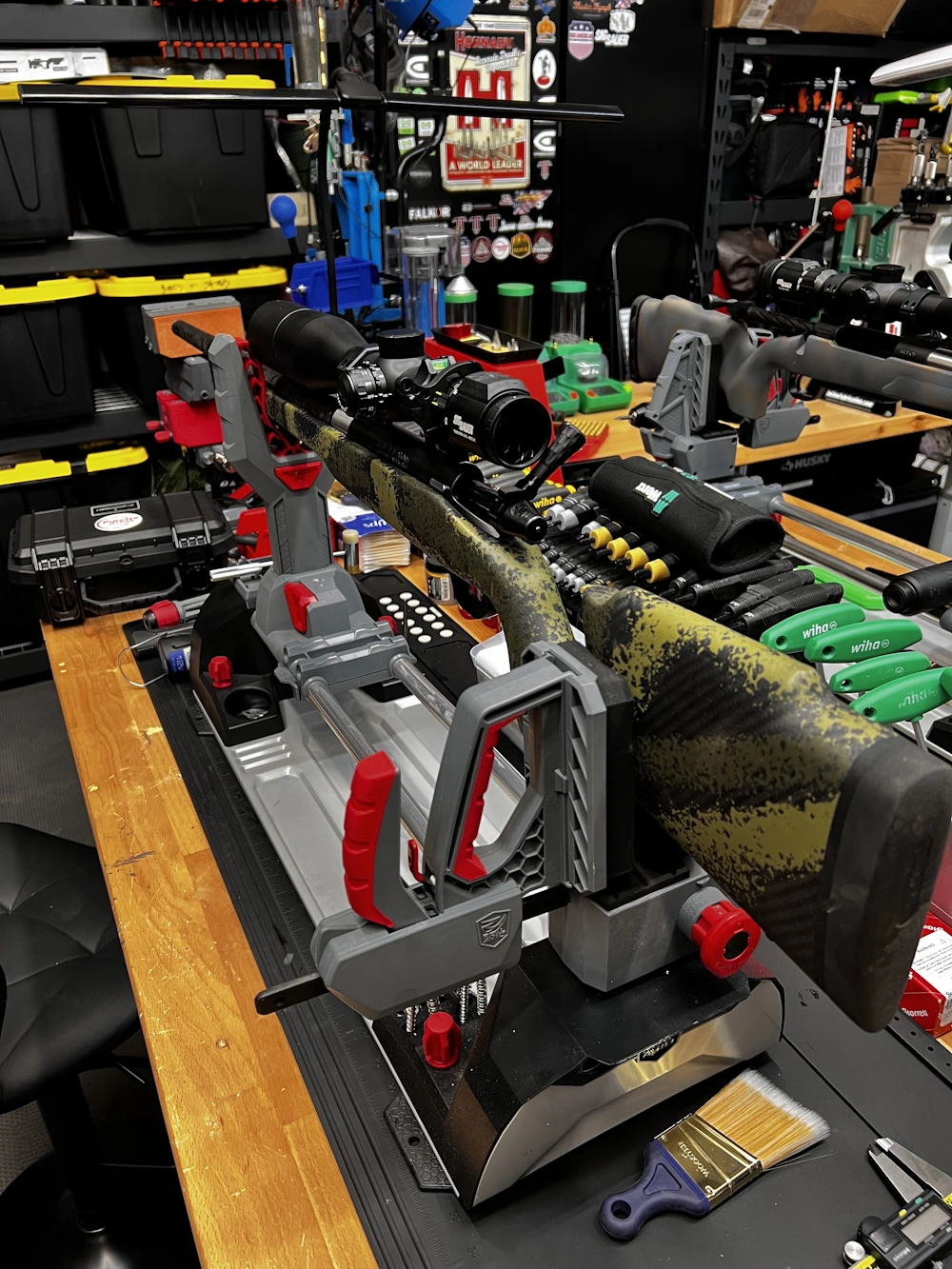
Cerakote Colors and Finishes: What to Consider Before Choosing a Look
Explore how to choose the right Cerakote color, sheen, and finish for your firearm. Learn how lighting and photography shift colors, how single-color and contrasting schemes compare, and what realistic wear looks like.
Choosing a Cerakote color and finish is one of the most personal steps in customizing a firearm. Whether you are refinishing an everyday carry handgun, refreshing a weathered hunting rifle, or completing a one-of-a-kind precision rifle build, the finish you choose defines both the appearance and practical character of the firearm. Because Cerakote offers an extensive palette ranging from traditional military neutrals to bold, distinctive tones, sorting through the options can feel overwhelming without a clear framework for how colors, sheens, and surface contrasts behave in the real world.
A successful Cerakote project starts with realistic expectations. Swatches viewed on a backlit smartphone screen rarely look identical to cured ceramic thin-film coatings under natural daylight, overcast skies, or fluorescent range lights. Furthermore, the firearm's mechanical design, how its parts interface, and how you intend to use it all influence which finish combinations age gracefully and deliver lasting satisfaction. At Precise Arms in Bellevue, Washington, we work with clients by appointment to review their goals, evaluate previous work in our custom firearm gallery, and ensure the chosen finish matches their vision before any coating begins.
Start with Intended Use and Environment
Before browsing specific color codes, consider where and how the firearm will spend most of its working life. A firearm's primary application often narrows your palette naturally and prevents aesthetic choices that clash with functional needs:
- Backcountry Hunting and Field Use: Rifles carried through Pacific Northwest timber, high-desert sage, or alpine ridges benefit from earth tones that blend into surrounding terrain. Matte shades of olive drab, flat dark earth, tungsten, coyote tan, and muted browns reduce glare and blend well against timber stocks or carbon-fiber chassis.
- Defensive and Everyday Carry: Handguns carried inside the waistband or in duty holsters are frequently selected in understated, low-profile shades such as graphite black, armor black, sniper grey, or deep titanium. These finishes resist visible holster burnishing better than high-contrast bright tones and keep the handgun discreet.
- Competition and Range Firearms: Precision rifle series (PRS) rifles, sporting clays shotguns, and range handguns offer more creative latitude. Contrasting accents, two-tone layouts, and vivid colors are popular choices when field concealment is not a factor.
- Heirloom Restoration and Refurbishment: For firearms undergoing restoration where the owner wishes to preserve a classic look without returning to bluing, deep satin black or graphite tones offer the corrosion defense of ceramic thin films while honoring traditional aesthetics. For a deeper breakdown of how modern coatings compare to bluing and Parkerizing, read our comparison on Cerakote vs. traditional gun finishes.
Solid Colors vs. Contrasting Schemes
One of the first aesthetic decisions is whether to coat the entire firearm in a single unified color or to introduce contrasting tones across different assemblies.
Single Solid Colors: Coating an entire barreled action, receiver set, or pistol slide and frame in one consistent color provides a clean, cohesive, professional look. Monochromatic builds highlight the firearm's lines and mechanical geometry rather than calling attention to individual parts. Solid dark finishes also tend to show wear more evenly over time, making them a safe, timeless choice for working tools.
Two-Tone and Contrasting Accents: A popular design approach pairs a neutral base with a contrasting slide, receiver, handguard, or small controls. Common examples include a black pistol frame with a titanium or tungsten slide, or an earth-toned rifle chassis accented by black barreled actions and controls. Contrasting small parts—such as pins, controls, bolt shrouds, or thread protectors—can add visual interest without overpowering the firearm's primary aesthetic.
Patterned and Thematic Finishes: Multi-color patterns, camouflage motifs, and distressed finishes require careful planning. The scale of a pattern must complement the proportions of the firearm; a pattern that looks striking on an AR-platform handguard may look crowded or chaotic on a subcompact handgun slide. Reviewing physical examples or completed project photographs helps ensure the pattern scales appropriately to the firearm's surface area.
Why Lighting and Photography Alter Color Appearance
One of the most frequent surprises for firearm owners is how dramatically Cerakote colors shift under different lighting conditions. Understanding this dynamic prevents misunderstandings between the digital swatch and the finished firearm:
- Screen Calibration: Every computer monitor, tablet, and smartphone display renders colors with different color temperatures, saturation levels, and contrast curves. A shade that appears warm and sandy on a phone display may lean cool or greenish-gray on a laptop screen.
- Color Temperature of Light: Tungsten workshop lights, fluorescent indoor range fixtures, direct midday sunlight, and diffuse overcast Pacific Northwest skies will each draw out different undertones from the same cured finish. Earth tones and grays are particularly prone to "metamerism," appearing warmer under tungsten bulbs and cooler under overcast daylight.
- Surface Geometry and Shadow: Firearms are three-dimensional mechanical tools with bevels, flutes, serrations, and contours. These curved surfaces create specular highlights and deep shadows that change how the human eye registers the overall color compared to a flat sample card.
Whenever practical, discuss physical swatches or review completed projects under natural light during an in-person consultation rather than relying exclusively on online image galleries.
Understanding Sheen and Surface Texture
Color is only half of the visual equation; sheen—the amount of light the cured coating reflects—has an equally profound impact on how the finished firearm looks and feels.
Cerakote finishes generally range from a flat, matte appearance to a smooth satin sheen. A dead-matte finish eliminates reflective glare, which is why it is preferred for hunting rifles, tactical equipment, and sights. However, matte finishes have a slightly higher microscopic surface profile, which can hold onto gun oil, carbon, or dust more noticeably until wiped clean.
A satin or semi-gloss finish reflects a gentle sheen across highlights, often giving the firearm a richer, deeper appearance reminiscent of finely polished factory metal. Satin finishes are typically easier to wipe clean after a range session, but they reflect more ambient light outdoors. Your project consultation can help balance glare reduction against maintenance ease.
Realistic Expectations for Normal Wear
Cerakote is renowned for exceptional hardness, abrasion resistance, and corrosion defense, but no finish is completely immune to the physics of friction. Understanding where and how normal wear occurs helps you choose colors that age gracefully:
- High-Friction Mechanical Zones: Slide rails, bolt lugs, charging handle tracks, and brass deflectors will experience finish burnishing with normal cycling. This is standard mechanical behavior and does not indicate coating failure.
- Holster Wear on Handguns: Rigid molded Kydex holsters concentrate pressure along the muzzle edges, front slide serrations, and ejection port corners. Over hundreds of draw cycles, the finish on these proud edges will slowly lighten. Darker colors tend to reveal holster wear less sharply than light or vivid shades applied over dark substrates.
- Color Contrast with Underlying Metal: If a light tan or bright color is applied over dark steel, eventual holster wear will reveal a noticeable contrast. Conversely, applying graphite black or tungsten over steel keeps wear patterns subtle and character-driven.
For a comprehensive look at what influences coating longevity and how to care for your finish, consult our guide on how long Cerakote lasts on a gun.
Planning Your Finish with Precise Arms
Because every firearm and intended application is unique, Precise Arms does not treat Cerakote as a generic spray service. We operate by appointment in Bellevue, Washington, serving firearm owners across Seattle, the Eastside, and the wider Puget Sound region. Every project begins with a conversation about your firearm's material, its current condition, your aesthetic preferences, and how you plan to use it.
During a consultation, we can discuss:
- Whether your firearm's components are suited for single-color, two-tone, or accented layouts.
- How the finish will pair with your stock, chassis, grips, or mounted optics.
- Whether your project would benefit from pairing Cerakote with firearm laser engraving or full custom rifle and pistol work.
- Realistic timelines based on shop schedule and preparation requirements.
Frequently Asked Questions
Can any firearm be coated in Cerakote?
Cerakote can be applied to a wide range of metals, including steel, stainless steel, aluminum alloys, and titanium, as well as many polymers and composite stocks. However, each firearm must be evaluated individually to confirm material compatibility, surface condition, and mechanical tolerances before work begins.
Will a Cerakote finish look exactly like the digital swatch on my screen?
Not always. Screen calibration, ambient lighting, and the firearm's three-dimensional contours all influence how a color appears to the naked eye. We encourage clients to review physical samples or completed work whenever possible to confirm expectations.
Does a lighter Cerakote color show wear faster than black?
The rate of mechanical wear is determined by the coating's formulation, application, and friction—not the color itself. However, because most firearm receivers and slides are made of dark steel, a worn light color creates higher visual contrast against the underlying metal than a dark gray or black finish.
Can I combine Cerakote with laser engraving?
Yes. Combining Cerakote with laser engraving is a popular way to personalize a firearm, add logos or meaningful markings, or enhance grip textures. Depending on the design, engraving can be performed before coating for a subtle recessed look or through the cured coating to create high-contrast markings.
Discuss Your Project with Precise Arms
If you are considering a custom Cerakote finish for your pistol, rifle, or shotgun, we invite you to reach out and discuss your project. Visit our contact page to schedule a consultation at our Bellevue workshop, or explore our custom precision rifles and custom pistols to see how professional finishing fits into our complete custom builds.
Important: Firearm services are subject to applicable federal, state, and local laws. Not every firearm or project is accepted. Contact Precise Arms before sending or bringing in a firearm to discuss the request and current availability.
Ready to Build Your Own?
Discuss your specific needs with our custom shop and get exactly what you're looking for.
Start Your Build