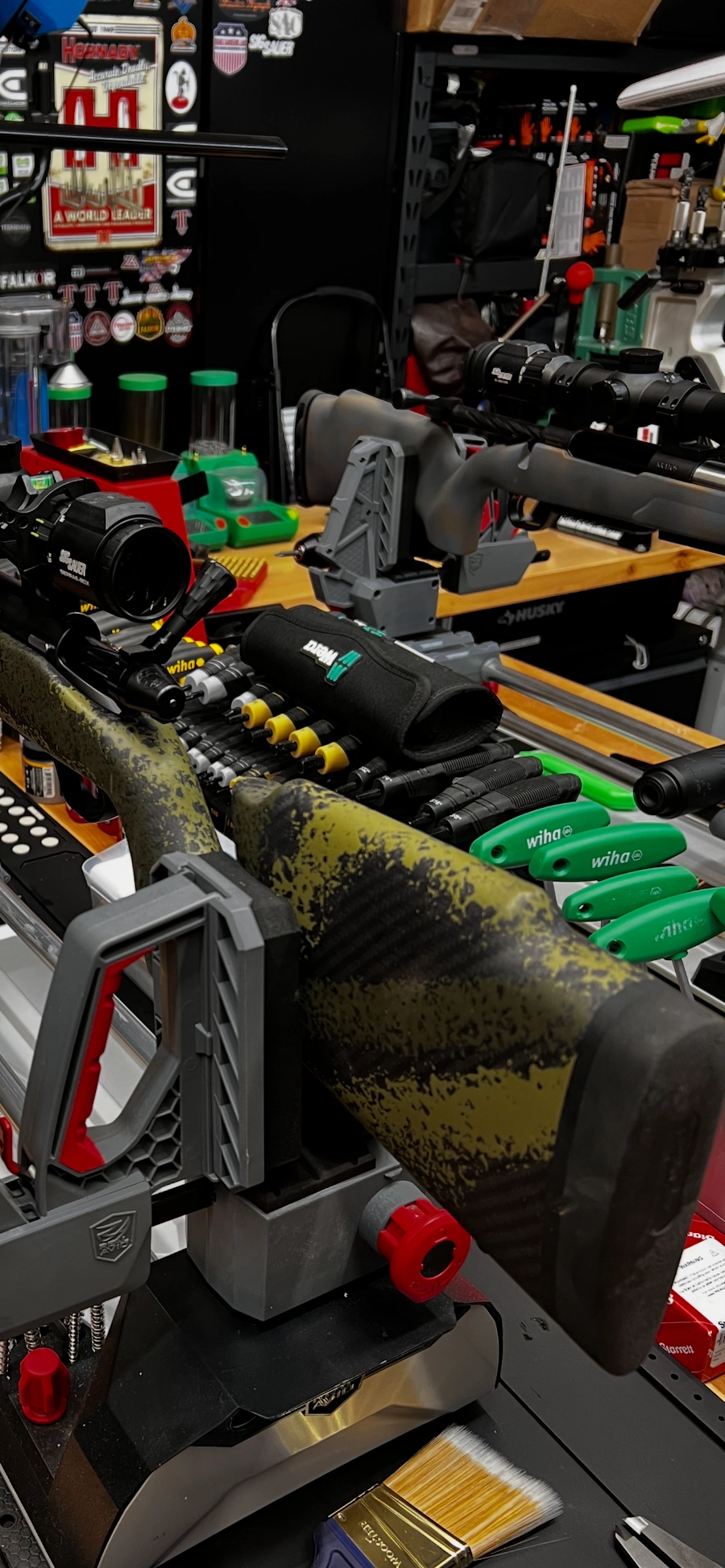
How Long Does Cerakote Last on a Gun? Durability and What Affects It
Explore how long Cerakote lasts on firearms, what factors affect its long-term durability, and how proper surface preparation and maintenance influence performance.
When firearm owners look into protective and custom finishes, one of the most common questions they ask is: how long does Cerakote last on a gun? The straightforward answer is that there is no single guaranteed lifespan or fixed number of years that applies to every firearm. Because Cerakote is a specialized ceramic-composite thin-film coating applied to a variety of substrates and subjected to vastly different environments, its actual service life depends directly on how the coating is applied, the firearm’s operating conditions, and how well it is cared for over time.
For an infrequently fired safe queen, a properly applied Cerakote finish can look virtually untouched for decades. For an everyday carry handgun repeatedly cycled into a rigid Kydex holster or a hard-use backcountry hunting rifle carried through brush and wet Pacific Northwest weather, gradual surface burnishing or edge wear in high-friction zones is a natural part of mechanical use. Understanding what Cerakote is, how it bonds, and what influences its longevity will help you set realistic expectations for your firearm.
What Is Cerakote on Guns and Is It Good for Your Firearm?
Cerakote is an advanced ceramic-based thin-film finish engineered specifically to deliver high resistance to corrosion, chemical exposure, abrasion, and impact. Unlike thick powder coats, traditional bluing, or rattle-can spray paints, Cerakote creates a micro-thin protective barrier—typically around 0.5 to 1.0 mil (12.7 to 25.4 microns)—that provides robust protection without disrupting the critical mechanical tolerances of precision firearms.
Is Cerakote good for your gun? For the vast majority of working firearms, custom builds, and restoration projects, professional Cerakote application offers distinct advantages over traditional finishes:
- Corrosion resistance: Ceramic formulations provide exceptional resistance to humidity, salt water, perspiration, and harsh weather conditions compared to bare metal or standard blued steel.
- Chemical resistance: Quality Cerakote is formulated to withstand standard firearm solvents, bore cleaners, oils, and degreasers without softening or stripping.
- Thermal stability: Certain high-temperature series formulations can withstand extreme heat levels generated by sustained semi-automatic fire or suppressors.
- Aesthetic customization: It allows for a wide array of single-color protective coatings or custom multi-tone patterns while maintaining tight dimensional integrity.
Primary Factors That Affect Firearm Cerakote Durability
No two firearms experience the same mechanical stresses. Several key variables dictate how well and how long a finish will endure:
1. Surface Preparation and Application Integrity
The single most critical factor in Cerakote durability happens before the spray gun is ever triggered. Complete chemical degreasing, proper thermal outgassing, correct media blasting (typically using virgin aluminum oxide to achieve the required mechanical etch profile), and precise cure timing and temperatures determine whether the ceramic coating achieves a true molecular-level mechanical bond with the substrate. Inadequate prep or contamination will drastically shorten any coating’s lifespan regardless of how carefully the firearm is handled.
2. Frequency and Nature of Use
A firearm subjected to thousands of rounds each year, frequent training drills, or heavy competition use will experience friction wear sooner than an occasional target rifle. Cerakote is highly durable, but physics remains physics—metal-on-metal sliding surfaces, lockup points, and high-pressure contact surfaces (such as bolt carrier rails, barrel hoods, or slide rails) will naturally show finish burnishing over extended use.
3. Holster Material and Carry Style
For handguns, holster selection plays a substantial role in exterior finish wear. Molded Kydex or hard polymer holsters create focused, high-pressure contact points against slide edges and muzzle profiles. Drawing and re-holstering repeatedly will eventually polish or burnish the finish at those localized points. Soft leather or lined holsters distribute retention friction more evenly, though grit trapped inside any holster will accelerate surface abrasions.
4. Environmental Exposure
Firearms carried outdoors in rain, snow, humid marine environments, or coastal salt air demand superior corrosion barriers. Cerakote excels in preventing underlying rust and pitting under these conditions, but regular inspection and proper maintenance remain essential after prolonged exposure to moisture.
Realistic Expectations: Where Cerakote Wears First
Cerakote does not peel or flake when properly applied; instead, it slowly burnishes and wears down in zones of direct friction. Firearm owners should expect normal wear patterns in areas such as:
- The contact edges of handgun slides from repeated holster draws
- Rifle bolt lugs and cocking cams where high mechanical friction occurs
- Shell deflector surfaces on semi-automatic rifles from ejected brass casings
- Magazine wells and mag release bevels from frequent reload cycles
On external surfaces like rifle actions, barrel exteriors, handguards, and handgun frames that do not experience constant metal-on-metal friction, Cerakote typically maintains its protective barrier and appearance for many years of dependable service.
How to Care for a Cerakoted Firearm
Maintaining a Cerakoted firearm does not require proprietary chemicals, but a few sensible habits will preserve its finish:
- Use standard gun-cleaning solvents: High-quality Cerakote resists standard bore solvents and lubricants, but avoid harsh industrial stripping solvents or aggressive metal scouring pads.
- Keep holsters free of debris: Dirt, sand, and range debris trapped inside a holster act as abrasive sandpaper against any firearm finish. Wipe holster interiors regularly.
- Clean and dry after foul-weather use: Even with exceptional corrosion protection, wiping away standing water, condensation, and finger oils helps protect springs, pins, and uncoated interior components.
Professional Cerakote Services in Bellevue, Washington
Precise Arms is a boutique custom firearms shop located in Bellevue, Washington, serving firearm owners, hunters, and competitive shooters across Seattle, the Eastside, and the greater Pacific Northwest. We approach every coating project individually—evaluating the firearm’s components, current condition, and your intended use before any work begins.
Whether you want to protect an outdoor hunting rifle, refresh an everyday carry pistol, or coordinate a complete custom project alongside our custom precision rifles or custom pistols, we ensure that proper disassembly, thorough degreasing, controlled abrasive blasting, and precise thermal curing are executed with meticulous craftsmanship.
Explore our dedicated Cerakote firearm services to learn more about our process, or visit our custom work gallery to view examples of finished projects.
Frequently Asked Questions
How many years does Cerakote typically last on a gun?
There is no universal number of years. For recreational firearms, it can easily last the life of the firearm with proper care. For heavy-use duty or everyday carry firearms, slight cosmetic wear on high-friction edges is normal over time, but the underlying metal remains well protected against corrosion.
Can Cerakote chip or peel off?
Properly applied Cerakote bonds mechanically to the etched metal surface and will not peel or flake. If a coating peels, flakes, or rubs off in sheets, it almost always points to improper surface preparation, inadequate degreasing, or incorrect curing during application.
Does Cerakote affect the firearm's accuracy or tight tolerances?
Because professional Cerakote is applied at a thickness of less than one-thousandth of an inch (approx. 0.001"), it rarely interferes with normal firearm operation when applied by experienced hands. Critical internal surfaces and tight-tolerance precision areas are carefully masked prior to coating.
Can a firearm be re-Cerakoted later if it wears?
Yes. An existing Cerakote finish can be carefully blasted away using aluminum oxide media during a refinishing process, allowing the firearm to be recoated in the same color or a completely new pattern.
Discuss Your Cerakote Project with Precise Arms
Every firearm finishing project begins with an individual consultation to discuss your firearm, its intended use, preferred color options, and project requirements. Contact Precise Arms to discuss your project and schedule an appointment at our Bellevue workshop.
Important: Firearm services are subject to applicable federal, state, and local laws. Not every firearm or project is accepted. Contact Precise Arms before sending or bringing in a firearm to discuss the request and current availability.
Ready to Build Your Own?
Discuss your specific needs with our custom shop and get exactly what you're looking for.
Start Your Build