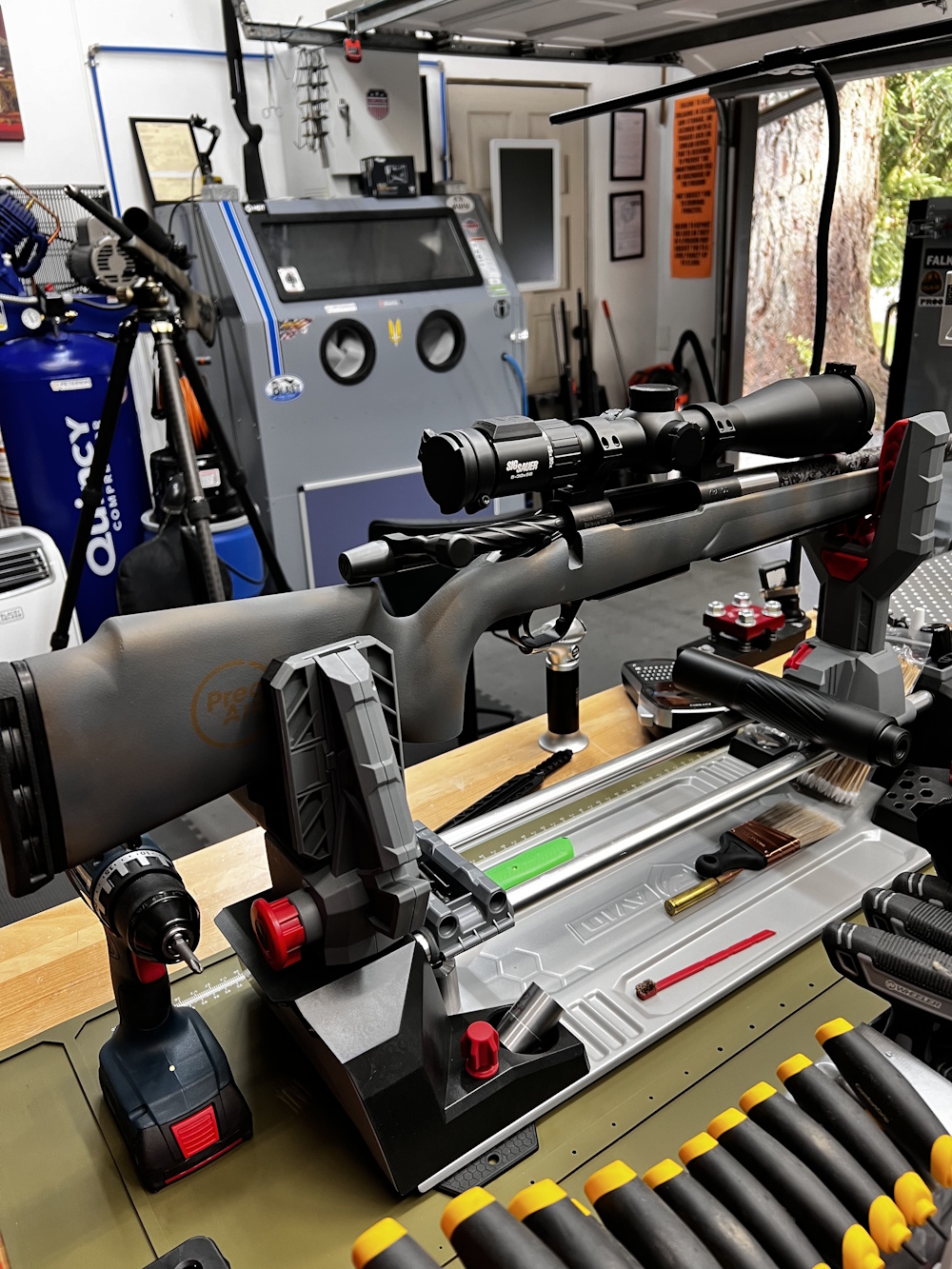
Planning a Rifle for Both Hunting and Long-Range Shooting
Planning a single rifle for both hunting and long-range shooting involves balancing competing priorities. Learn how to evaluate weight, recoil comfort, practical field use, and the tradeoffs that matter most.
Many shooters find themselves asking a natural question when planning a new rifle project: can one rifle excel both on an open mountain ridge during hunting season and on a long-range target line on the weekend? It is an appealing idea—investing in a single, well-crafted platform that feels familiar in your hands across multiple shooting pursuits.
At Precise Arms in Bellevue, Washington, we often discuss this crossover goal with clients. While it is entirely possible to configure a rifle that bridges hunting and extended-distance target work, doing so requires understanding that the two disciplines place fundamentally opposite demands on a firearm. Rather than chasing an elusive universal formula, successful planning begins with understanding the tradeoffs and clarifying which compromises align with your personal priorities.
The Competing Demands of Hunting and Long-Range Shooting
To understand why planning a dual-purpose platform is an exercise in balance, consider how each activity defines success:
- Hunting Applications: A hunting rifle is primarily carried. For miles across steep timber, sagebrush basins, or backcountry trails, every ounce counts against fatigue. Quick target acquisition from field positions—off trekking poles, a backpack, or improvised natural rests—is critical. Weather resistance, handling ease in tight quarters, and dependable cold-bore execution take precedence over sustained rapid fire.
- Long-Range Target Shooting: A target rifle is primarily supported. Whether shooting prone from a bipod or from a stable bench, additional mass is an asset rather than a liability. Extra weight steadies reticle float, absorbs felt recoil, helps you spot your own bullet impacts downrange, and allows for sustained shooting sessions without user fatigue.
When you ask a rifle to do both, every design decision pulls in two directions. If you make the platform light enough for comfortable all-day mountain ascents, it may be lively and fatiguing under prolonged target sessions. If you build it heavy enough to track rock-steady on distant steel, carrying it several miles into remote terrain can quickly become a chore.
The Three-Way Balance: Weight, Recoil, and Practical Field Use
When clients consult with us on custom precision rifles, we guide the conversation around three interrelated factors:
1. Carried Weight vs. Stability
Total system weight—including the action, barrel contour, stock geometry, optic, mount, and accessories—determines both how easy the rifle is to pack and how stable it remains when aiming. While modern composite stocks and carbon-fiber barrel configurations allow builders to trim weight without sacrificing rigidity, going too light creates its own challenges behind the rifle.
2. Recoil Comfort and Follow-Through
Felt recoil is directly linked to firearm mass and cartridge energy. A heavier rifle soaks up recoil energy, keeping your eye behind the optic so you can watch your trace and assess the impact. In a very lightweight setup, recoil is sharper. While a hunter taking one or two deliberate shots during a season may not mind stiff recoil, putting fifty rounds downrange during an afternoon practice session becomes significantly more demanding on the shooter's fundamentals.
3. Ergonomics and Field Maneuverability
Target stocks often feature vertical pistol grips, wide forends, adjustable cheekpieces, and generous lengths of pull tailored for deliberate, prone shooting. In the field, however, snag hazards, overall rifle length, and balance while slung over a shoulder dictate how smoothly the rifle maneuvers through brush and timber. Balancing these physical dimensions ensures the rifle remains functional in both environments.
How Terrain and Your Typical Outings Dictate Priorities
No two shooters share the exact same routine. The right balance for someone hunting whitetails from an elevated blind within a short walk of their truck is vastly different from someone undertaking a high-country elk hunt requiring seven miles of steep elevation gain. Similarly, a shooter whose target work focuses on casual weekend steel out to 500 yards has different needs than someone participating in structured long-range practical matches.
Consider your realistic annual use: will this rifle spend 80% of its rounds on the target range with one or two hunting trips each fall, or is it a dedicated hunting tool that only sees the range for seasonal sight-in and positional practice? Honest self-assessment about your typical outings provides the clearest compass for where to strike the balance.
Why There Is No Single "Ideal" Setup for Everyone
It is tempting to look for a standardized checklist or a consensus recommendation online. But true custom firearm planning is deeply personal. One shooter may have high recoil tolerance and happily carry a slightly lighter rifle, while another prefers a heavier, exceptionally steady system and is fully prepared to pack the extra pounds into the backcountry.
Ammunition consistency is equally integral to this system. A rifle configured for extended distance requires dependable, predictable ammunition performance to achieve its full potential. To learn more about how ammunition can be tailored to a specific firearm, explore our guide on custom rifle load development and our overview of custom ammunition services.
How a Consultation Clarifies Your Project
Because every crossover rifle involves thoughtful compromise, starting with an in-depth conversation is the most effective way to avoid expensive trial and error. Rather than recommending a rigid off-the-shelf build, Precise Arms evaluates your shooting background, physical ergonomics, physical terrain, and performance aspirations one-on-one.
During a consultation, we help you weigh options regarding:
- Overall target system weight and balance points
- Barrel length, profile, and material considerations
- Stock styles that offer field mobility without sacrificing target ergonomics
- Optic magnification ranges and mounting systems that suit both woodland hunting and distant target identification
Frequently Asked Questions
Can a single rifle genuinely perform well for both hunting and long-range shooting?
Yes, provided expectations are realistic. A well-planned crossover rifle can be capable and rewarding in both roles, but it represents a deliberate compromise between the featherweight ease of a mountain rifle and the heavy stability of a dedicated match platform.
How much does a typical crossover rifle usually weigh?
Weight varies considerably based on components and shooter preference. Rather than targeting an arbitrary number, we evaluate what total weight you are comfortable carrying across your typical terrain while maintaining enough mass to shoot comfortably at your intended distances.
Can Precise Arms help me decide which compromises make sense for my hunting style?
Yes. Helping clients define their priorities and evaluate practical tradeoffs is the core of our consultation approach. We discuss your hunting terrain, physical preferences, and shooting goals to guide the project direction.
Does Precise Arms accept every custom rifle project?
No. Precise Arms is a boutique custom shop, and every project is evaluated individually based on current shop capacity, safety considerations, component availability, and alignment with our craftsmanship standards.
Discuss Your Rifle Project with Precise Arms
If you are planning a rifle project and want to explore the right balance for your hunting and long-range shooting goals, we welcome the opportunity to discuss your vision. Contact Precise Arms to schedule an individual consultation with our team in Bellevue, Washington.
Important: Firearm services are subject to applicable federal, state, and local laws. Not every firearm or project is accepted. Contact Precise Arms before sending or bringing in a firearm to discuss the request and current availability.
Ready to Build Your Own?
Discuss your specific needs with our custom shop and get exactly what you're looking for.
Start Your Build