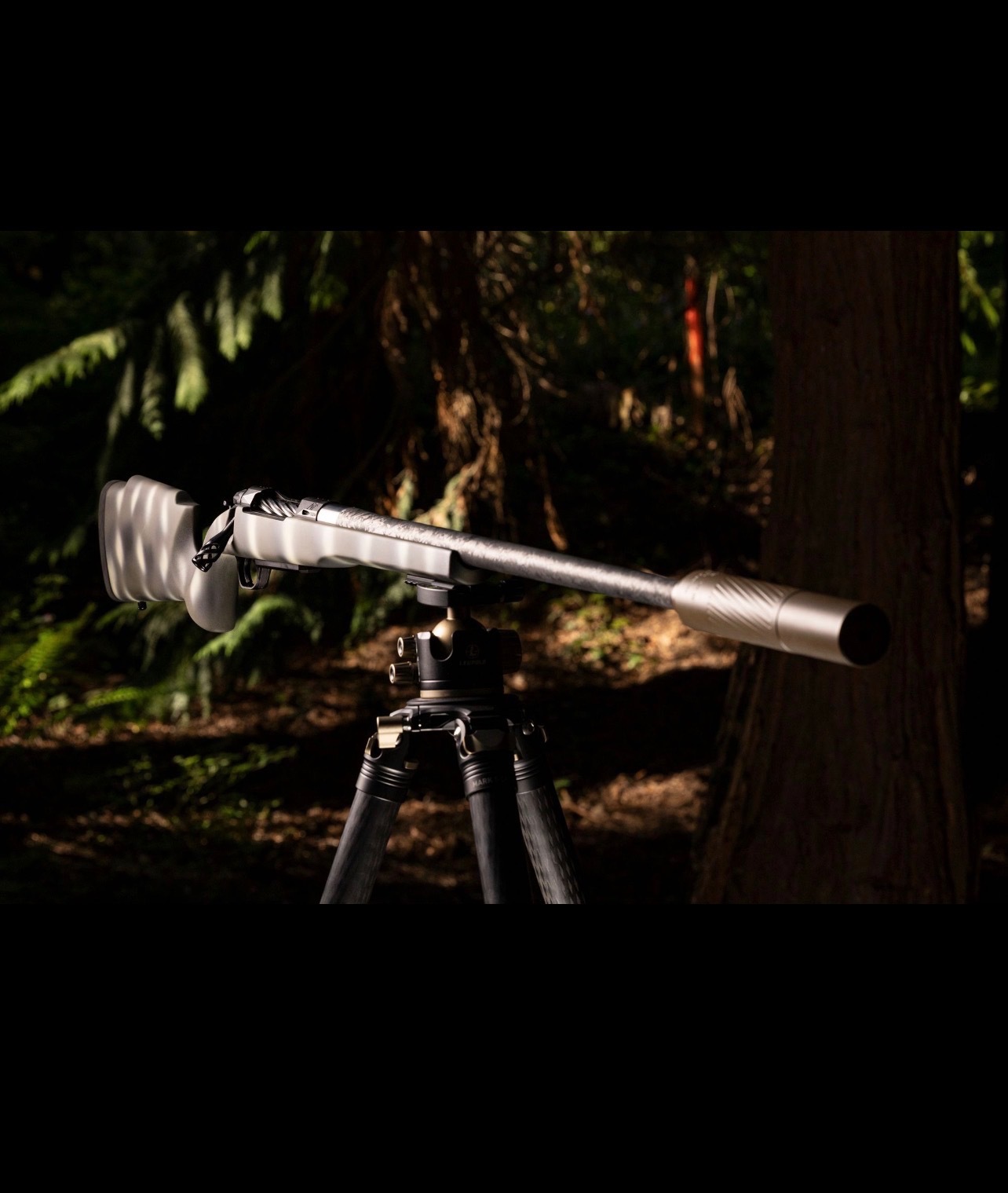
How to Prepare for a Custom Rifle Ammunition Consultation
Learn what information helps when preparing for a custom rifle ammunition consultation with Precise Arms, from rifle details and shooting goals to key questions.
A custom rifle build or precision shooting setup is only as consistent as the ammunition fed through it. When factory ammunition fails to deliver the repeatability you expect, or when you are investing in a purpose-built precision firearm, a custom ammunition consultation is the natural first step. At Precise Arms, we take a consultation-led approach to understand the specific firearm, the shooter, and the performance goals behind every build.
You do not need to be an expert in internal ballistics or reloading to have a productive initial conversation. In fact, you do not need to diagnose rifle or ammunition issues yourself—that is our role as craftsmen. However, taking a few minutes to gather basic details about your setup and shooting goals can help us provide the most tailored guidance right from the start.
What to Gather Before Your Conversation
Every firearm chamber and barrel responds uniquely to different projectiles, seating depths, and propellant charges. When preparing to discuss custom ammunition with our shop, having the following details on hand will help guide our evaluation:
- Rifle Make, Model, and Chambering: Note whether your rifle is a factory production platform, a custom action build, or one of our custom precision rifles. Knowing the exact caliber or cartridge designation (for example, 6.5 Creedmoor, .300 PRC, or .300 Win Mag) provides our starting baseline.
- Barrel Specifications (If Known): Details such as barrel manufacturer, length, profile, twist rate, and approximate round count can provide valuable context for projectile stabilization and velocity potential. If you do not know these specifications, do not worry—we can evaluate them during project intake.
- Your Primary Intended Use: How and where will this rifle be used? Requirements differ significantly between long-range precision competition, backcountry hunting, tactical applications, or enjoyable weekend range sessions.
- Current Observations or Frustrations: Are you experiencing unacceptable velocity spreads, unexplained fliers, inconsistent grouping past a certain yardage, or difficulty finding match factory ammo that shoots well in your rifle?
- Prior Ammunition Experience: Note any factory loads or bullet weights that have performed well—or poorly—in this firearm. Past performance data helps eliminate variables and establish a helpful starting point.
Understanding the Role of Your Intended Use
In custom load development, there is no single universal "best load." Instead, success is defined by how well a cartridge performs for its intended application. For a deep dive into the technical process itself, explore our article on custom rifle load development.
When you consult with us, we will discuss how your operational requirements shape component choices:
- Long-Range & Precision Competition: Consistency is king. The focus centers on high ballistic coefficient (BC) projectiles, minimal extreme velocity spread (ES), low standard deviation (SD), and predictable trajectory at extended distances.
- Hunting Applications: Terminal bullet performance, reliable expansion across realistic field distances, durable cartridge handling, and consistent cold-bore accuracy take precedence over paper-target perfection.
- Recreational or Range Use: A balanced load that delivers dependable accuracy without unnecessary barrel wear or excessive component cost may be the ideal outcome.
You Do Not Need to Diagnose the Problem Yourself
Clients sometimes hesitate to reach out because they feel they lack the technical vocabulary to explain why a rifle is underperforming. Please rest assured: you do not need to diagnose mechanical or ballistic issues on your own. Describing what you see on the target, how the rifle feels, or what goals you want to achieve is more than enough. Our role is to ask the right questions, inspect the critical dimensions, and evaluate the path forward.
Important In-Person Consultation & Transport Guidelines
Precise Arms is a boutique custom firearms shop located in Bellevue, Washington, and we operate strictly by appointment only. To ensure safety, legal compliance, and shop security, please observe the following guidelines:
- Always contact us first: We do not accept unscheduled walk-ins. Every consultation must be scheduled in advance.
- Do not transport firearms or ammunition without prior instruction: When scheduling your consultation, please ask our team whether bringing your firearm, fired cartridge cases, or current ammunition is necessary for the initial meeting. Never bring uncased or loaded firearms to our facility.
- Individual Evaluation: Each project is evaluated individually based on our current shop capacity, safety considerations, component availability, and the mechanical suitability of the firearm. Precise Arms does not promise to accept every requested project or repair.
Questions to Ask During Your Consultation
A consultation is a two-way conversation. We encourage clients to bring any questions they have regarding the process and expectations. Common topics include:
- What is the typical evaluation and development workflow for my specific cartridge?
- How will our chosen load be documented for future repeat batch orders?
- What expectations should I have regarding component availability?
- How will environmental conditions (temperature, elevation) be considered in the load development process?
- What are the immediate next steps once our consultation is complete?
Frequently Asked Questions
Do I need to know my rifle's exact twist rate before contacting you?
No. While having barrel details like twist rate, length, and manufacturer is helpful, it is not mandatory. If your rifle is a factory model or you are uncertain of its specifications, we can identify or measure the critical dimensions during the project evaluation.
Should I bring my rifle to the initial consultation?
Please ask us in advance before bringing any equipment. In many cases, an initial phone or video conversation is all that is needed to determine project viability. Never transport or bring a firearm to our facility without prior written or verbal instructions from our staff.
Can load development be done for any rifle caliber?
We evaluate requests across a broad range of hunting, competition, and tactical cartridges—including popular precision calibers such as 6.5 Creedmoor, 6.5 PRC, .308 Winchester, .300 Win Mag, and .300 PRC. However, project acceptance depends on component availability, tooling, and individual evaluation.
Does Precise Arms guarantee specific group sizes or velocities?
No. Precise Arms does not make universal accuracy or performance guarantees. Real-world precision depends on the mechanical condition of the firearm, optic systems, atmospheric variables, and shooter fundamentals. What we deliver is methodical, precision-grade craftsmanship and careful component matching designed to maximize your rifle's potential.
Start Your Consultation
If you are ready to explore tailored ammunition developed around your rifle, intended use, and performance goals, the first step is simple. Contact Precise Arms to schedule your initial conversation. We look forward to discussing your setup and evaluating the right direction for your project.
Important: Firearm services are subject to applicable federal, state, and local laws. Not every firearm or project is accepted. Contact Precise Arms before sending or bringing in a firearm to discuss the request and current availability.
Ready to Build Your Own?
Discuss your specific needs with our custom shop and get exactly what you're looking for.
Start Your Build